



What is Autism?
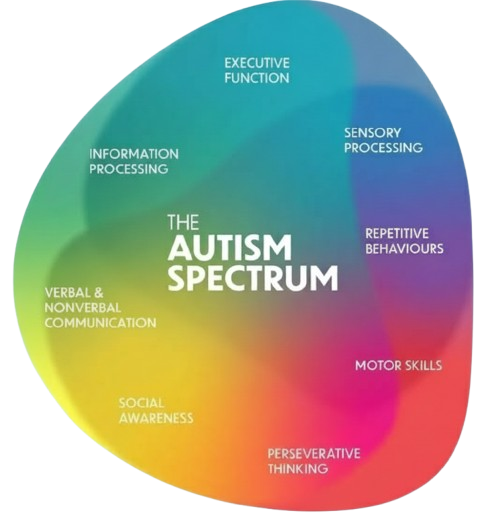
Autism Spectrum Disorder (ASD) is a neurodevelopmental condition that affects communication, behavior, social interaction, and sensory processing. It presents differently in every individual.
Understanding Autism
- Impairment in social communication and interaction
- Restricted or repetitive behavior patterns
- Sensory sensitivities (hyper or hypo sensitivity)
- Differences in learning, attention, and responses
Red Flags for Autism
1
Poor eye contact from birth
2
Not liking to be cuddled from birth
3
No babbling by age of 9 months
4
No response to name by 9 months
5
No single words by age of 12 months
6
No social smile by age of 12 months
7
Not pointing finger at objects by 18 months
8
Loss of language at 12 to 18 months
9
No two words together by age of 24 months
10
No Pretend Play by age of 30 months
11
Sensory issues or repetitive behavior
Aim of Management
- Improve communication skills
- Improve adaptive skills
- Improve social functioning and play skills
- Decrease non-functional and negative behavior
- Promote academic functioning and cognition
- Promote independence
Management of Autism Spectrum Disorder (ASD)
As such, there is no medication solely for Autism. However, the FDA has approved a
few drugs for treating irritability associated with Autism. These can help in
relieving irritability, often improve sociability, while reducing tantrums, aggressive
outbursts, and self-injurious behaviors. Medication must be
given with proper consultation and strict monitoring.
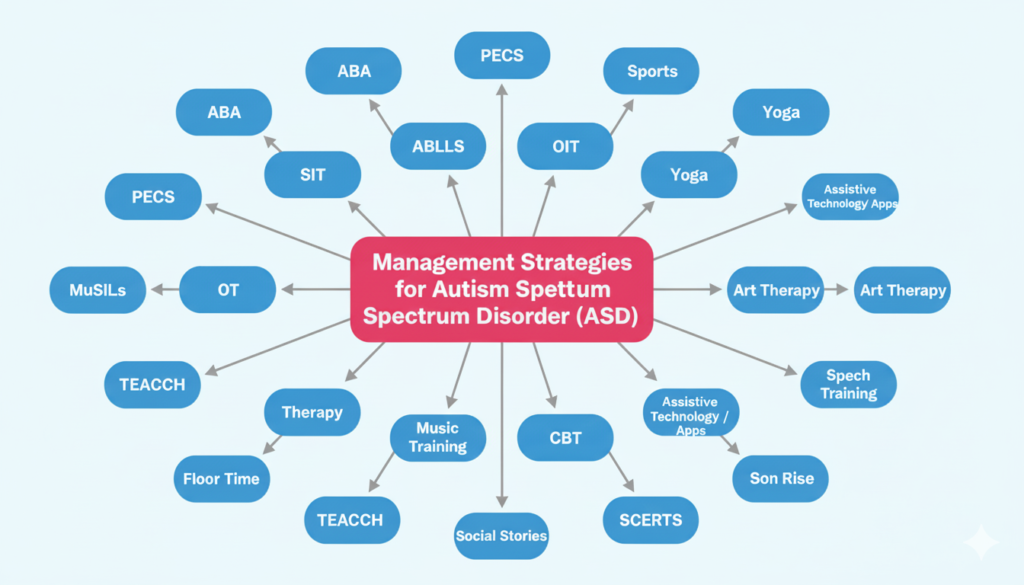
All therapeutic interventions are currently being used for the treatment of ASD children with ASD.
Eclectic/Multidisciplinary Treatment approaches are utilized as needed to address the individual needs of each child. Focusing on only one intervention will not bring an overall change in the child.